
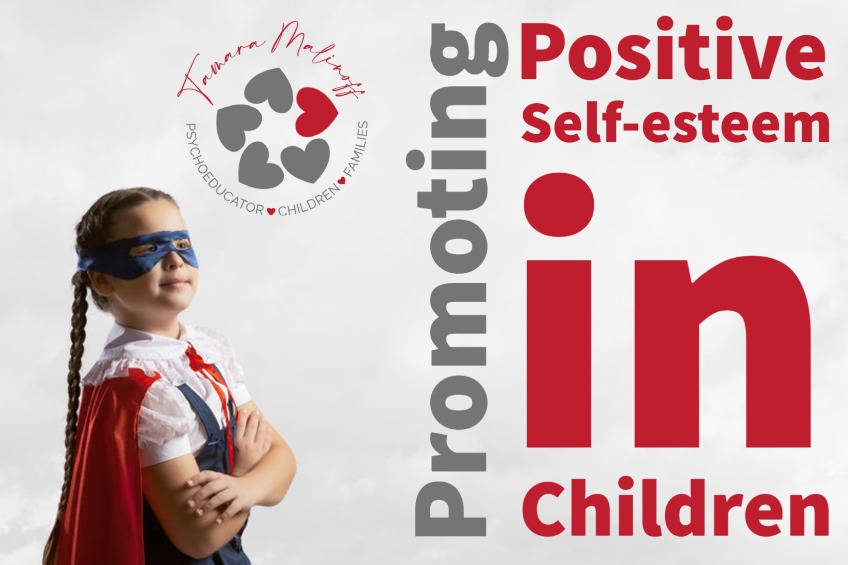
Self-esteem is a term used to describe our sense of worth and value. It is about how good we feel about ourselves. Promoting healthy self-esteem is one of the most important characteristics in a child’s development. Having positive self-esteem can also a be a protective factor for emotional well-being and mental health.
As children grow and mature, they develop their self-concept which is their opinions about themselves; and includes their abilities, intelligence, and their personalities. During the preschool years, children discover they are individuals and develop a positive self-concept. In middle childhood, the self-concept goes through changes and becomes more defined and logical as their cognitive development increases, and they become more aware of their social environment.
Self-esteem in middle childhood:
During middle childhood (6 to 11 years), children start to compare themselves to others, allowing them to learn about who they are as individuals and how they can contribute to society. As children become more self-aware, they can be encouraged with praise for their process, rather than praising their person. Same applies to any successes such as academic or sports, the emphasis is on the activity, or how they learn and relate to others and not because they are smart or popular.
Children with positive self-esteem:
- are more confident and independent
- form healthy and secure relationships
- are resilient
- can take responsibility for their actions
- make better decisions – even in the face of peer pressure
Children with negative self-esteem:
- are more negative towards themselves and others
- tend to give up more easily
- have nervous habits
- act out more often
- are overly sensitive to how other’s may perceive them
Positive tips for promoting healthy self-esteem in children:
Love unconditionally
Love sets the foundation in all healthy and stable relationships. Children feel safe when we show them consistent love; it fosters a sense of security and is essential to how they will view themselves. Connect with them every day and give them your undivided attention, look and smile at them when they enter the room. Show physical affection: hug them when leaving to do your day, cuddle together when reading stories or watching T.V., making sure to love as an action while also telling our children that they are loved. As they grow, they will take the love they receive and carry it towards building their own social network by making friends and being a team player.
Give children responsibilities
Everyone needs to feel like they are contributing members of society and what better way then to experience this in our own families first. Teaching responsibilities through developmentally and age-appropriate chores promotes purpose and allows children to experience a sense of accomplishment, while giving them a sense of control over their own lives. They may not do it perfectly or as well as well as we can, so it is important to encourage the process and thank them for helping out by taking care of the family and helping make things easier. We are more efficient working together and Sunday morning cleaning can turn into a fun routine that is rewarded with a beautiful brunch or fun activity.
Turn mistakes into learning opportunities
Children will make mistakes and they will fail. These life lessons teach children to accept responsibility for their actions and learn to express remorse if they hurt another person, it also teaches empathy. When they fail at something (a test, making the team) they are learning about disappointment and how to tolerate frustrations. Failure is a stepping-stone in the learning process. Allowing children to experience failure also builds resilience and perseverance to study harder and learn from their mistakes.
Positive discipline
When we see behaviors that need to change, our responsibility as parents is to guide and teach our children. Discipline methods that are severe may have the child fear a parent’s disapproval while withdrawing love and affection when they need it most. If we show conditional love to children, they will behave to show themselves worthy of parental approval, where the emphasis is now on the behavior, rather than the value of the child. It is so easy to love someone when they are loveable but love in action recognizes the person while consequences are directed towards the behaviors. Discipline means teaching, an opportunity to learn from mistakes. We want to protect a child’s self-esteem by not humiliating or shaming them, personally or publicly.
Take care of yourself
Parenting is wonderful and can also be challenging. We tend to neglect our own needs to make sure our children receive the very best we can offer. Only, this may have the reverse effect if we neglect ourselves. The core of positive self-esteem is feeling good about oneself. If we are not feeling good, it becomes difficult to model for our children. Take at least 30 minutes each day to do something that will make you feel good: read, go for a walk, listen to music, organize a closet, or coffee with a good friend. When we are not feeling good about ourselves, we may withdraw and less present to be able to connect with our children.
Ultimately, we need to accept each child for who they are as a person, not defining them by the behaviors we would want to see changed. If your child is showing signs of low self-esteem, begin by building them up daily with unconditional love. It is the most essential ingredient to the emotional health and positive self-worth of our children.