
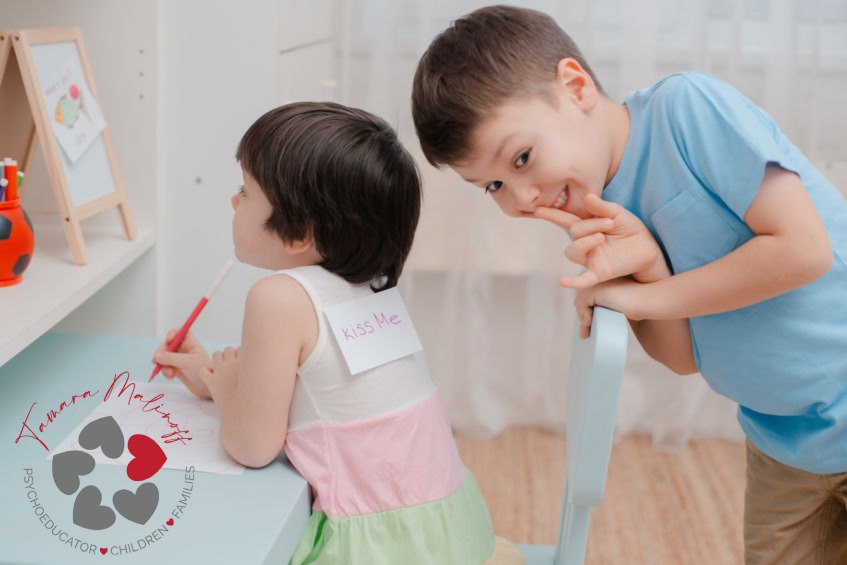
Developing a Sense of Humor
There was no shortage of pranks in our home when my children were younger. April Fools’ Day was one of their favorite days for creating chaos, but they could strike at any time. A friend once gave them a gift of practical jokes, complete with supplies and a manual. Oh, the creative things kids will do! Cream cheese on my deodorant, walking into a film of saran wrap, whoopee cushions, Vaseline on the door handles, plastic flies in my coffee…more antics than I care to remember. Yet, it is the pure innocence of their laughter that I hold in my heart.
A sense of humor is not something we are born with, but actually a learned skill that children develop. Laughing together is a way to connect, and a good sense of humor can also help children cope with challenges.
Laughter is a joyful sound and is easily understood in any language. Having a good sense of humor helps kids emotionally and socially, plus, there are many more benefits. Research has shown that people who laugh more are healthier, less likely to be depressed and may even have an increased resistance to illness.
Meet them where they are at developmentally
Similar to how children meet their developmental milestones, a child’s sense of humor develops at different ages and stages of their development.
Babies do not yet understand humor but respond to facial expressions and funny noises. They will try to imitate your joy by smiling back and connecting. Simply making a funny face can bring out those big belly laughs.
Toddlers enjoy the element of surprise and physical humor like peek-a-boo or tickles. At this stage, they may want to make their parent/caregiver laugh by pointing to the wrong answer like “where are your ears?” and they touch their nose. They may also find it funny to imitate adults by wearing your shoes and trying to walk in them.
Preschoolers 3 to 4 year’s old tend to be very silly. They are very literal at this stage so if something is not right, they will find it extremely funny – like a dog that meows or the antics of their favorite cartoon character. Also, at this stage is when potty words and sounds are a crowd pleaser for this age. Around 5-6 years, they will start using their own creative ways of expressing humor and may tell endless jokes.
As they go through the elementary school years, humor is an important way to connect with their peers by telling jokes or trying to get others to laugh. At this stage, children begin to understand non-literal humor; they may find humor in teasing and understand sarcasm around 9-11 years old.
A good sense of humor is a tool that helps children:
- engage in play and connect socially with others
- foster creativity and a different way of thinking
- to be spontaneous
- not taking themselves or things too seriously
- see things from another perspective
Setting boundaries while developing a sense of humor
While we want to encourage their development, we also need to teach children the boundaries when it comes to humor and teasing, just as we do in so many other areas. We want to discourage jokes which are offensive and hurt others. The best way to do this is to be a good role model and avoid using humor in this way. If someone tells a hurtful or inappropriate joke, we shouldn’t laugh but rather teach them by taking the time to explain to our children why that joke isn’t funny. Likewise, we want to quickly move in when there is a lot of bathroom talk, letting them know that saying those words or making those noises belong only in the bathroom. We are teaching them about the timing of jokes and that some places, like in class, at family or religious gatherings, are not appropriate places.
Ways to encourage humor in the home
Be their role model by telling jokes that are age appropriate, clean, and fun or tell funny stories. It is important to be authentic and laugh out loud. Share the enjoyment, even if you do not find it as funny as your child, let them know you appreciate why you see it is funny for them. One parenting pleasure is to watch your children grow and realize they have your same crazy sense of humor.
Create an environment that is fun. Watch comedies together or have a game night. One game that is sure to make children laugh is to see who can keep a straight face the longest without laughing. Books are also fun. Younger children will enjoy funny pictures or silly rhyme books while older children enjoy joke books, cartoons, or comics.
Humor is an early childhood developmental skill that we can easily encourage and enjoy while we are doing it!
Whichever ways you choose to bring humor into your home, it will create lasting family memories and joy for years to come. Our children will remember these joyful, funny moments and cherish the silly fun we had.